Raw materials
Fibers from mono-fermentation
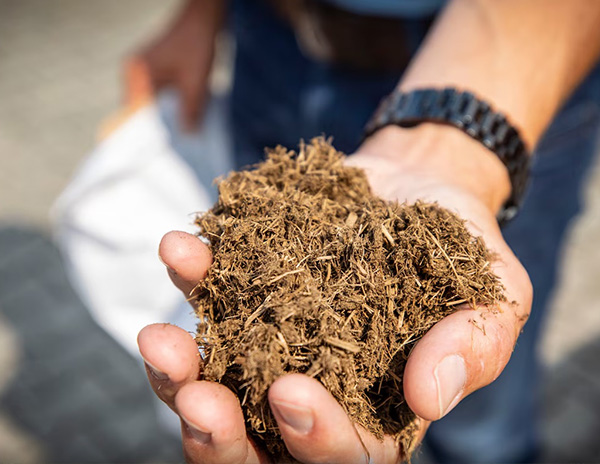
Silphie fiber is a sustainable, locally produced raw material with excellent properties for use in substrates as an alternative to peat. The fiber is a by-product of mono-fermentation of the perennial Silphie plant and combines strong physical qualities such as high water retention, good air porosity, and stable bulk density. Chemically, the fiber is favorable, with low EC values, low salt content, and it contains no pesticides, heavy metals, or plant pathogens. Standard growth tests with lettuce, garden cress, and kohlrabi show very good results. The fiber is completely free from weeds and germinable seeds, and after 250 days of storage in 40-liter bags, it maintains excellent quality.
Physical properties:
· Good bulk density, water retention, and air porosity
Chemical properties:
· Good chemical profile: Low salt levels > EC
Stability:
· Good stability
Growth test:
· Standard growth tests (lettuce, garden cress, kohlrabi) > good results
Storage test:
· Storage in 40-liter bags for 250 days > no issues observed
Purity and safety:
· No weeds or germinating seeds
· Nematodes – plant pathogens – heavy metals: good results
· No pesticides
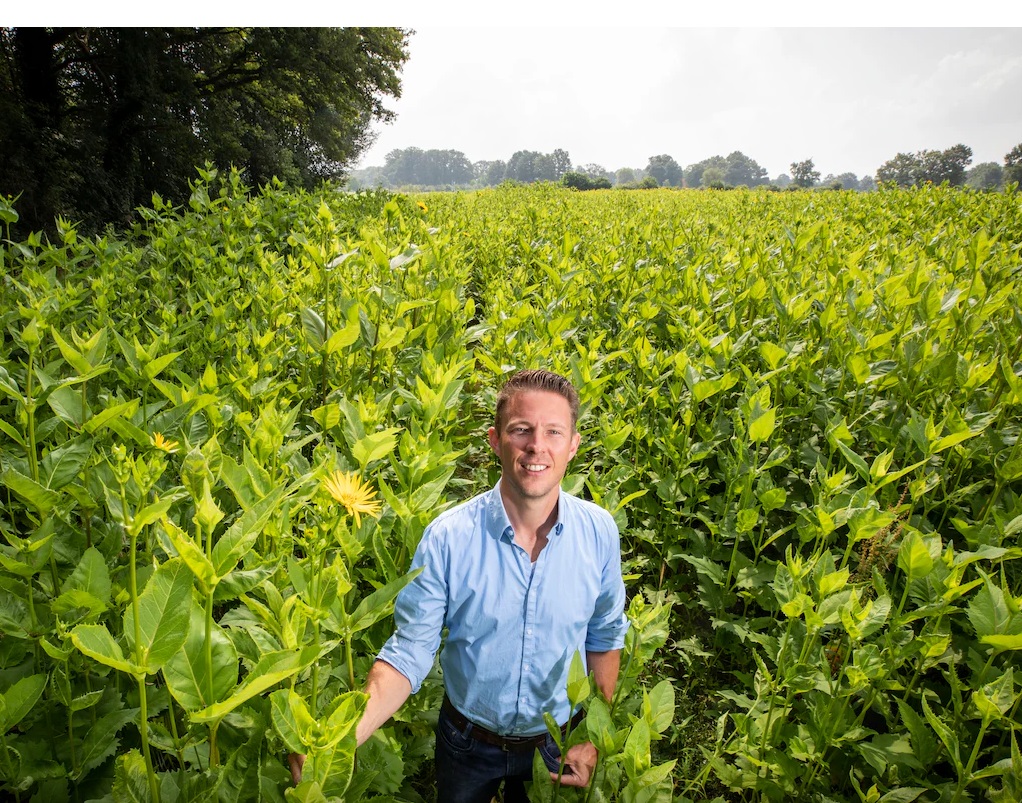
Image: © Robin Hilbrink – Tubantia
Plant
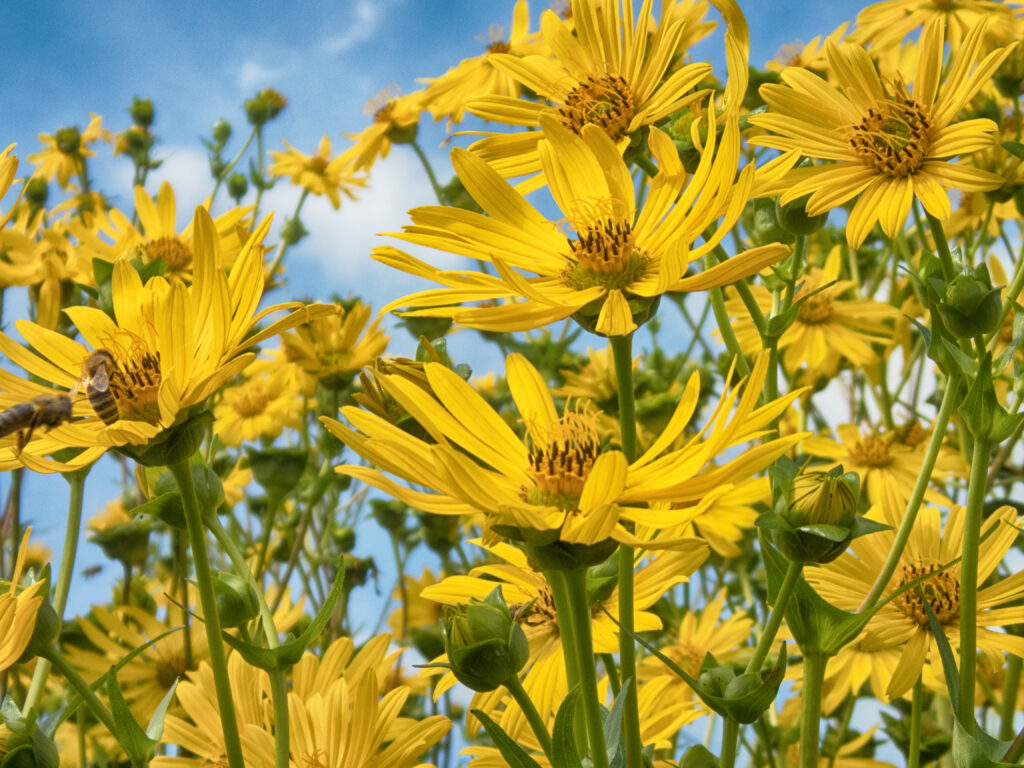
Silphie itself is a sustainable crop: it remains productive for at least 20 years, requires minimal crop protection, and enhances biodiversity. Its permanent soil cover supports erosion control, CO₂ sequestration, and humus formation.
– Energy crop for biogas production
– Perennial crop that can be harvested annually for at least 20 years
– Water and erosion control through permanent soil cover
– Humus buildup & CO₂ carbon sequestration in the soil: > 8 t CO₂ / year / ha
– Long flowering period and habitat for insects
– Alternative fibers for bio-based raw materials and peat substitute
– Promotion of native ecosystems and biodiversity
– Good nutrient efficiency and low pesticide use
– Significantly reduced field activities
A high quality green choice
Silphie offers a reliable, ecological, and future-proof alternative to peat. Moreover, the fiber is locally available and fits seamlessly into the transition toward a circular economy.